


Blog
Why Tachograph Rolls Still Matter in the Age of Digital: A Buyer’s Guide

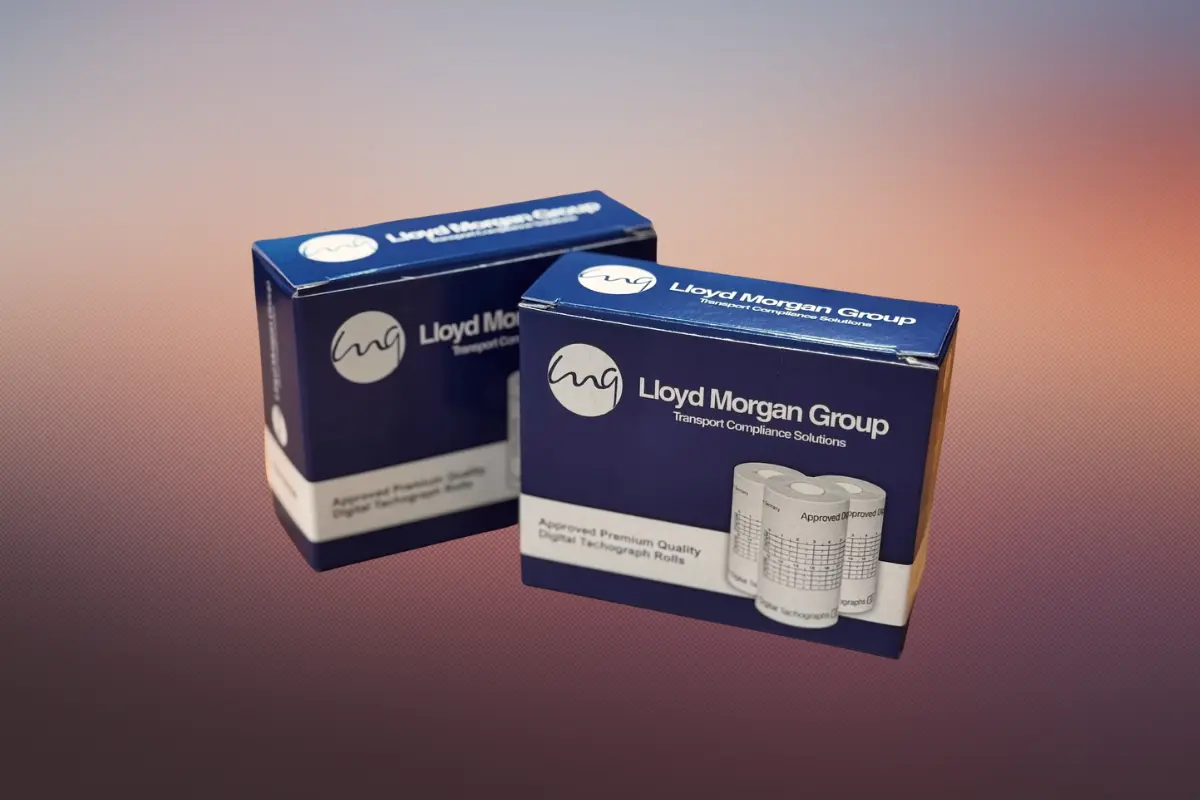
Ask a newer fleet manager what tachograph rolls are for and they may shrug. The driver card stores the data. The vehicle unit backs it up. Everything gets downloaded and analysed. So what is a paper roll doing in the equation?
The answer is straightforward, and the consequences of getting it wrong are not minor. Tachograph printer rolls are a legal requirement, not an optional accessory. Running out of them, carrying the wrong type, or using low-quality paper that produces an unreadable printout are all compliance failures. In a DVSA roadside check, a driver who cannot produce a printout faces a fixed penalty. In a Traffic Commissioner review, a pattern of tachograph record failures is the kind of thing that costs operators their licence.
This guide covers the legal position, the differences between digital printer rolls and analogue chart discs, what to look for when buying, and how to manage tachograph supplies across a fleet without running into enforcement problems.
LMG Shopper is part of Lloyd Morgan Group, which provides tachograph analysis, transport compliance, and operator licence support to fleets across the UK. The buying guidance in this article reflects the same compliance perspective that the Lloyd Morgan Group team applies when working with operators on their tachograph obligations. [INTERNAL LINK: Lloyd Morgan Group tachograph analysis service]
The Legal Requirement: Why the Roll is Not Optional
Digital tachographs store data on the driver card and in the vehicle unit’s internal memory. None of that changes the legal requirement to carry printer rolls. The reason is enforcement: a DVSA examiner conducting a roadside check needs to be able to see tachograph records on the spot, without downloading data via specialist equipment. The printout is how that happens.
The rules on this are clear. Under the UK assimilated tachograph regulations, a driver must carry sufficient supplies of type-approved print roll on board the vehicle so that a printout can be produced at an enforcement officer’s request. The requirement is not for a full archive of printed records; it is for the capability to produce one when asked.
In practice this means:
- There must be a roll loaded in the tachograph printer unit at all times.
- At least one spare roll must be carried in the cab.
- The roll must carry the correct type approval number for the tachograph unit it is used in.
Failing to carry type-approved print rolls is classified as a tachograph infringement. A Level 4 tachograph offence carries a maximum fine of £2,500 per infringement. For fleet operators, a pattern of such failures creates a record that Traffic Commissioners take seriously at licence review. This is not a corner to cut.
Two Types of Tachograph Record: Rolls and Charts
The word ‘tachograph rolls’ is used in conversation to mean two quite different things, depending on the vehicle. It is worth being precise, because the products are not interchangeable and the compliance requirements differ.
Digital tachograph printer rolls
Vehicles first registered on or after 1 May 2006 were required to be fitted with digital tachographs, and the majority of active UK fleet vehicles now use them. A digital tachograph printer roll is a roll of thermal paper, typically 57 mm wide and 8 metres long, which loads into the printer unit built into the tachograph head. When a printout is requested, the unit prints a record of driver activity as text and pictograms onto the paper.
Thermal paper is sensitive to heat, oil, grease, water, and direct sunlight. A printout on poor-quality paper can fade to illegibility within weeks or even days if exposed to these conditions. This matters because printouts used as manual records need to remain legible: a driver who makes manual entries on the back of a printout and cannot produce a readable copy at an enforcement check has a compliance problem regardless of what the vehicle unit records.
Analogue tachograph chart discs
Vehicles registered before 1 May 2006 may still carry analogue tachographs, and a smaller number of specialist or exempt vehicles continue to use them. Analogue tachographs do not use rolls. Instead, each driver inserts a circular wax-coated paper chart disc at the start of every shift. Three styli cut traces directly into the wax coating to record speed, distance and activity mode throughout the day. The driver fills in name, date, start and end locations, and odometer readings in the centre field of the chart by hand.
Analogue chart discs are specific to the tachograph model and must be type-approved for the unit in use. A chart designed for one manufacturer’s tachograph will not record accurately in another’s. Drivers are responsible for carrying enough charts for the whole journey, including spares in case of damage.
The records from analogue charts are legal documents and must be retained by the operator for a minimum of twelve months, rising to twenty-four months where the chart data constitutes the only source of working time records for Working Time Directive compliance.
| Digital printer roll | Analogue chart disc | |
| Format | Thermal paper roll, 57 mm wide | Circular wax-coated paper disc |
| Vehicles | All vehicles registered from May 2006 | Pre-2006 vehicles; some specialist types |
| How records are made | Printer unit produces text and pictogram printout on request | Styli cut traces directly into wax coating throughout the shift |
| Spare requirement | One roll loaded; at least one spare in cab | Sufficient charts for the full journey; spare for damage |
| Compatibility | Type-approved for digital tachograph units (universal-approval rolls available) | Must match specific tachograph model |
| Retention (operator) | 12 months minimum; 24 months where WTD compliance depends on it | As digital |
Understanding Type Approval Numbers
Every digital tachograph printer roll must carry a type approval number confirming it has been tested and approved for use in certified tachograph equipment. This approval is given by a national authority and takes the form of a code such as e1 84 (Continental VDO DTCO 1381), e2 25 (Actia SmarTach STD), or e5 0002 (Stoneridge SE5000).
The most common tachograph units currently in use across UK fleets and their corresponding approval numbers are:
| Tachograph unit | Manufacturer | EC approval number |
| DTCO 1381 | Continental VDO | e1 84 |
| SmarTach STD | Actia | e2 25 |
| SmarTach ADR | Actia | e2 29 |
| SmarTach STD II | Actia | e2 30 |
| SE5000 | Stoneridge | e5 0002 |
| EFAS-3 | EFKON | e1 200 |
| EFAS-4.0 | Intellic | e1 222 |
Many rolls on the market now carry universal approval, meaning they are tested and certified for use in all approved digital tachograph units. Universal-approval rolls carry the overall thermal paper approval number (e1 210 in many cases) and are the most straightforward option for fleets running mixed vehicle types. Confirm the approval marking is visible on the packaging before purchase.
Fleet tip: If your fleet runs a single tachograph type throughout, unit-specific rolls can sometimes be sourced at better prices. If you run a mixed fleet, universal-approval rolls eliminate the risk of a driver loading the wrong roll into the wrong unit.
Paper Quality: Why It Matters More Than Many Operators Realise
Thermal paper looks identical regardless of quality grade. The difference only becomes apparent after the roll has been stored in a cab for a few weeks in summer temperatures, or after a printout has been handled and exposed to grease or moisture.
Low-quality thermal paper fades under heat. Dashboard temperatures in summer can reach well above 60°C, and glove boxes or sun-exposed areas of a cab can reach 90°C. A roll stored in those conditions will lose print clarity quickly. Printouts made on poor-quality paper exposed to diesel, hand cream, or ordinary perspiration can become unreadable within days of being made.
This is not a trivial concern. Printouts are legal documents. Where a driver has made manual entries on the reverse of a printout (name, driver card number, driving licence number, and blocks of activity times), that paper record needs to remain legible for the full retention period. A faded or illegible manual record is a compliance gap.
Quality indicators to look for when buying:
- Top-coated thermal paper specification, which significantly improves resistance to heat, oil, grease and water.
- Individually flow-wrapped rolls, which prevent degradation during storage.
- BPA-free certification, which is both an environmental and safety indicator and a marker of higher-grade manufacture.
- Legibility guarantee period: reputable suppliers specify that printouts will remain legible for ten years under normal storage conditions.
- UK or EU manufacture, which typically indicates consistent quality control.
Bulk-buy caution: it is reasonable to stock tachograph rolls in volume to reduce cost and avoid running out. The risk is storing large quantities in vehicles or poorly ventilated storage areas where heat degrades the thermal coating before the rolls are used. Individually wrapped rolls stored in a cool, dry location will retain quality for their rated lifespan. Unwrapped rolls stored in a hot cab will not.
Buying for a Fleet: Quantities and Stocking
The right quantity depends on fleet size, average journey length, and how often printouts are generated. A driver making a printout at the start and end of each shift uses two short sections of roll per day. A driver making additional printouts for enforcement checks, manual entries, or equipment faults will use more. A rough working guide:
- A single-vehicle operation: one box of three rolls per quarter is a reasonable minimum stocking level. Carry two spare rolls per vehicle.
- A fleet of five to fifteen vehicles: a box of ten to fifteen rolls per month is a practical bulk purchase that keeps vehicles stocked without excessive storage or degradation risk.
- A larger fleet: rolls are available in boxes of fifty or more, which reduces cost per roll significantly. Pair with a formal stock rotation policy to ensure older rolls are used first and no roll is stored beyond its rated lifespan.
For operators running analogue vehicles alongside digital ones, the stocking requirement is different: analogue chart discs are consumed one per vehicle per day, regardless of journey length. A vehicle doing five days per week requires a minimum of five discs per week plus spares for damage. Chart discs should always be ordered to match the specific tachograph model in use. Ordering the wrong chart for a model is a common mistake on mixed or older fleets.
Transport manager tip: Include tachograph roll and chart stock as a standing agenda item on your monthly compliance review. Running out mid-week because someone forgot to reorder is an avoidable infringement risk. Set a reorder threshold at a level that allows for lead time.
The Smart Tachograph Transition and What It Changes
The UK tachograph landscape is in a transition period that operators need to understand, because it affects which equipment is in use and, indirectly, which paper rolls are required.
Smart Tachograph Generation 2 (Smart 2) became mandatory for all newly registered in-scope goods vehicles from 24 December 2025. From 1 July 2026, vehicles over 2.5 tonnes used for international hire-and-reward journeys must be fitted with a full Smart 2 unit. The previous Smart 1 generation can continue in use in vehicles where it was originally fitted for domestic operations, and a faulty Smart 1 must now be replaced with a Smart 2 rather than a like-for-like replacement.
From a printer roll perspective, Smart 2 tachographs continue to use 57 mm thermal paper rolls with type approval certification. The same quality considerations apply. Universal-approval rolls that cover all current digital tachograph units are the most practical choice for fleets managing this transition period, as individual vehicles may have different generations of equipment.
The Smart 2 tachograph introduces GNSS (satellite positioning) recording and DSRC (short-range communication) capability, which affects how data is captured and inspected at the roadside. It does not change the fundamental requirement to carry approved printer rolls. The enforcement mechanism for paper records at the roadside remains the same regardless of which generation of digital tachograph is fitted.
The Analogue Vehicle: Still in the Fleet?
Vehicles manufactured before May 2006 may still be operating on analogue tachographs, particularly in specialist sectors such as recovery, agricultural haulage, and some construction operations. If your fleet includes any of these vehicles, the chart disc requirement needs separate management from your digital printer roll stock.
Key practical points for analogue fleets:
- Charts must be type-approved for the specific tachograph model in use. Different manufacturers’ charts are not interchangeable.
- The driver must use a fresh chart at the start of each working day. Using a chart for longer than its 24-hour period is an infringement.
- Analogue tachographs require inspection every two years and recalibration every six years. A tachograph with a broken seal will fail the annual roadworthiness test.
- Completed charts are legal documents and must be handed to the operator. Drivers must carry the current day’s chart plus those generated in the previous 28 days.
- Operators must retain analogue charts for at least twelve months, and twenty-four months where they are the only source of working time data.
Frequently Asked Questions
How many tachograph rolls must a driver carry?
There must be a roll loaded in the tachograph printer unit at all times, and at least one spare roll must be carried in the cab. The DVSA guidance requires drivers to carry sufficient supplies of type-approved print roll to produce a printout when requested by an enforcement officer. Carrying two spare rolls is a sensible operational standard, particularly for drivers on longer routes or multi-day tramping operations.
What happens if a driver runs out of tachograph rolls?
Failing to carry type-approved print rolls is a tachograph infringement. At a roadside check, a driver who cannot produce a printout faces a fixed penalty. The absence of rolls may also be recorded against the operator’s OCRS (Operator Compliance Risk Score), which contributes to the risk profile the DVSA and Traffic Commissioner use when deciding enforcement priority and licence review triggers.
Do all tachograph rolls fit all digital tachographs?
Not automatically. Every roll must carry a type approval number confirming it has been certified for use in approved tachograph equipment. Many rolls on the market carry universal approval covering all current digital tachograph units, and these are the most practical choice for mixed fleets. Single-unit-specific rolls are available but require operators to ensure the correct roll is matched to the correct vehicle. Always verify the approval number on the packaging before purchasing.
Can I use standard thermal paper in a digital tachograph printer?
No. Standard till rolls and generic thermal paper do not carry the required type approval and are not compliant for use in digital tachographs. Using unapproved paper could also damage the printer mechanism. Tachograph printer rolls must carry the appropriate EC or UKCA type approval marking. This is not a rule that is open to interpretation.
How long do tachograph records need to be kept?
Drivers must carry records for the current day and the previous 28 calendar days at all times while driving. For international journeys, the requirement is 56 days. Operators must download data from driver cards at least every 28 days and from vehicle units at least every 90 days. Downloaded data and analogue charts must be retained for a minimum of twelve months, rising to twenty-four months where the tachograph data is the only source of working time records for Working Time Directive compliance.
Do smart tachographs still need paper rolls?
Yes. Smart Tachograph Generation 1 and Generation 2 units both include a printer and require 57 mm thermal paper rolls. The data storage and enforcement inspection mechanisms have evolved with each generation, but the requirement to carry type-approved printer rolls and be able to produce a printout on request remains in place regardless of the tachograph generation fitted.